
HomeHomeowner guidesChoosing a system
Homeowner guide · Choosing a system
Types of air conditioners
Whether you are heating or cooling one room, several areas or the whole house, there is a system to suit. Here is how the main types differ.
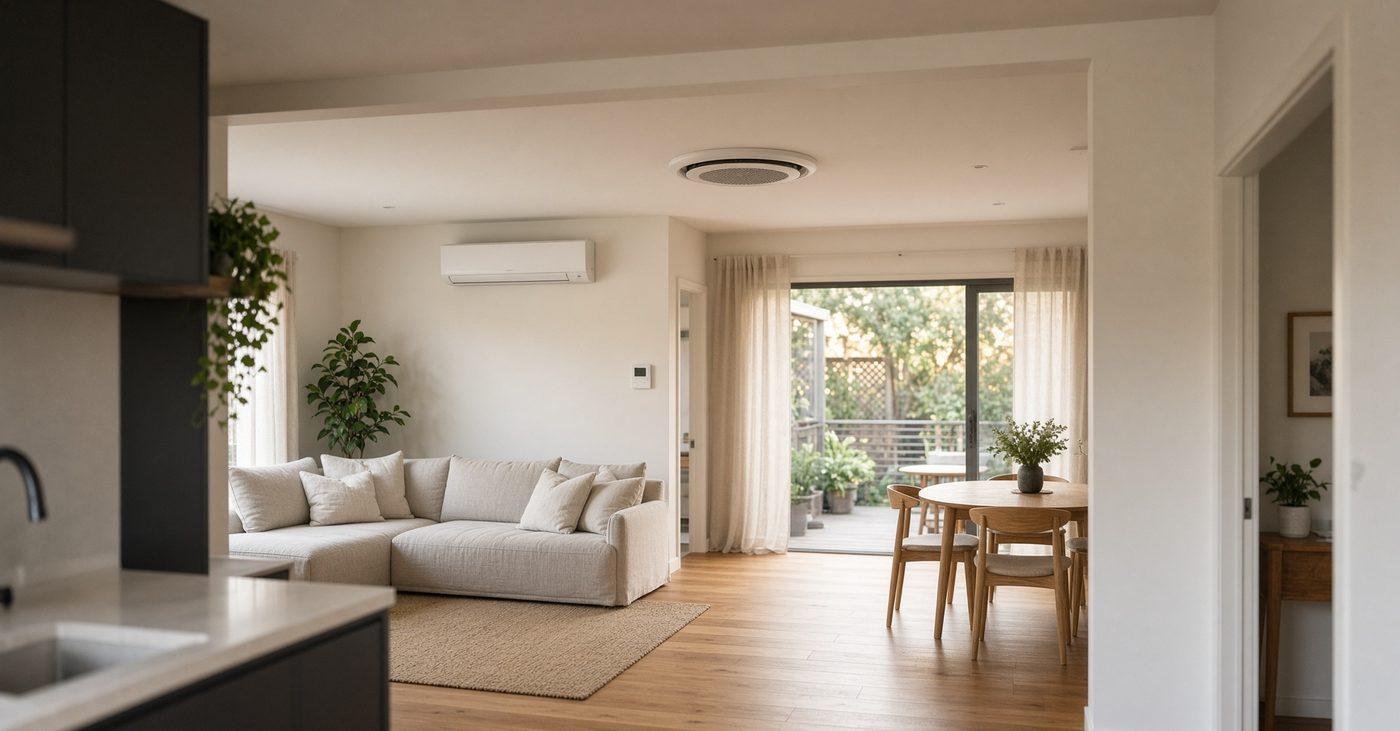
The short version
- A split system serves one room or area, is compact and efficient, and is the usual choice for room air conditioning.
- A multi-split runs several indoor units off one outdoor unit, with each room controlled separately, and suits homes with no space for ducting.
- Ducted air conditioning covers the whole house from a unit in the ceiling or under the floor, with the option to condition only the rooms in use.
What to weigh up
There is a wide range of air conditioners on the market, and most jobs can be done more than one way. The challenge is finding the system that suits your home on durability and reliability, energy efficiency, how it looks, noise level and, most importantly, your budget.
The types below are the ones you will meet when you start getting quotes. Each is best at something different, and the right answer depends on how many rooms you want to condition, how the house is built and how you use it.
One older type is worth knowing by name. The room air conditioner (RAC) is the box in a window or wall, with the whole system in one package. It is quick and cheap to fit but tends to be noisy and unsightly, and it is rarely installed in homes now. It comes in cooling-only or reverse cycle (heating and cooling) versions.
Split systems
A split system is the room air conditioner cut in half. The indoor fan and coil sit in a unit mounted on the wall inside. The compressor and outdoor coil sit in a slim housing outside, which can be installed many metres away from the indoor unit.
Split systems are ideal for heating or cooling one room or area of your home. They are compact and energy efficient, and newer models are quieter than ever. Indoor units come as discreet wall-mounted or compact floor-standing types designed to blend into the room. Because the outdoor unit can go some distance away, they are flexible to install and less obvious on the outside of the house.
Most split systems come in cooling-only or reverse cycle (heating and cooling) versions, and offer extras such as remote control, timers and humidity control so you can set the conditions you want all year round.
For most single-room jobs, a split system is the preferred choice. If you are deciding between a split system and ducted, read do I need a split system or ducted air conditioner.
Multi-split systems
A multi-split system runs several indoor units from a single outdoor unit. It can heat or cool between two and nine separate rooms, and each room has its own control.
Multi-splits suit houses with limited space for ducting, such as homes with no roof cavity or a flat roof. Because each room is controlled on its own, you only heat or cool the rooms you are using, which keeps running costs down.
It is worth knowing that the cost of a multi-split is often close to the cost of fitting a separate split system in each room. The advantage is one outdoor unit instead of several, which matters when outside wall or yard space is tight.
Most multi-split systems are available in reverse cycle (heating and cooling) and cooling-only models.
Ducted air conditioning
Ducted air conditioning is the whole-of-home option. It provides climate-controlled comfort throughout the house all year round. You can heat or cool the whole house at once, or select the areas you want conditioned to save on running costs, for example living areas during the day and bedrooms at night.
Ducted systems can be installed in a new home or tailored to suit an existing one. The indoor unit sits in the ceiling or under the floor. Flexible ducting carries the conditioned air to vents in the rooms you choose. The condensing unit sits outside, so a ducted system is visually less intrusive than a split or multi-split, with no wall units in the rooms.
Most of the leading manufacturers offer a range of MEPS-compliant ducted systems, meaning they meet the Minimum Energy Performance Standards set by government.
For help narrowing down a ducted system, read how to choose the right ducted air conditioner.
Which type suits your home
As a rough guide:
- One room or area: a split system. Compact, efficient and the usual choice.
- Several rooms, no room for ducting: a multi-split. Separate control for each room from one outdoor unit.
- The whole house: ducted. Quiet inside, out of sight, with zoning so you only run what you need.
The size of the system matters as much as the type. A unit that is too big for the space works harder and costs more to run. An accredited dealer will look at the rooms, the aspect and the windows before recommending a size. See how big a system do I need and what a proper quote includes.
Before you ask for quotes
- Decide how many rooms you want to heat or cool, now and in a few years.
- Check whether there is roof or underfloor space for ducting.
- Note where an outdoor unit could sit, and whether one or several would fit.
- Decide whether you need heating as well as cooling (reverse cycle).
- Think about noise, appearance and your budget, not just the purchase price.
- Ask the dealer to size the system to the rooms, not to guess.
An ACDA accredited member works out which type suits your home and puts it in a written quote. Find an accredited dealer near you.
Choose an accredited dealer
Every ACDA member has already been checked against the same standard.