
HomeHomeowner guidesInstallers and quotes
Homeowner guide · Installers and quotes
How to check an air conditioning installer
Licences, qualifications and the questions that separate a good installer from a cheap one. Licensing examples are for NSW; other states differ.
The short version
- In NSW, anyone installing more than a plug-in unit needs a contractor licence in air conditioning and refrigeration, and a refrigerant handling licence from the ARC.
- A Certificate II installer is limited to basic split systems. For ducted, multi-split or any repair work, look for Certificate III and a full ARC licence.
- Ask for the licence numbers, an itemised written quote and the name of who will do the work. An accredited member has all three ready.
Choosing an installer is more than getting a good price. The right choice protects your safety, keeps the job legal, gets the performance you paid for, and keeps the manufacturer's warranty intact.
Which licences to check
Installers carrying out air conditioning and refrigeration work in NSW must hold a current contractor licence in air conditioning, and in some cases an electrical licence as well, under NSW Fair Trading rules. That covers almost all work beyond a plug-in unit: anything involving refrigerant, electrical wiring, split systems, ducted systems and multi-splits.
A qualified supervisor licence in air conditioning and refrigeration, or an equivalent qualification, is the standard for work that involves diagnosing faults, carrying out repairs, installing larger or more complex systems, and the associated electrical work.
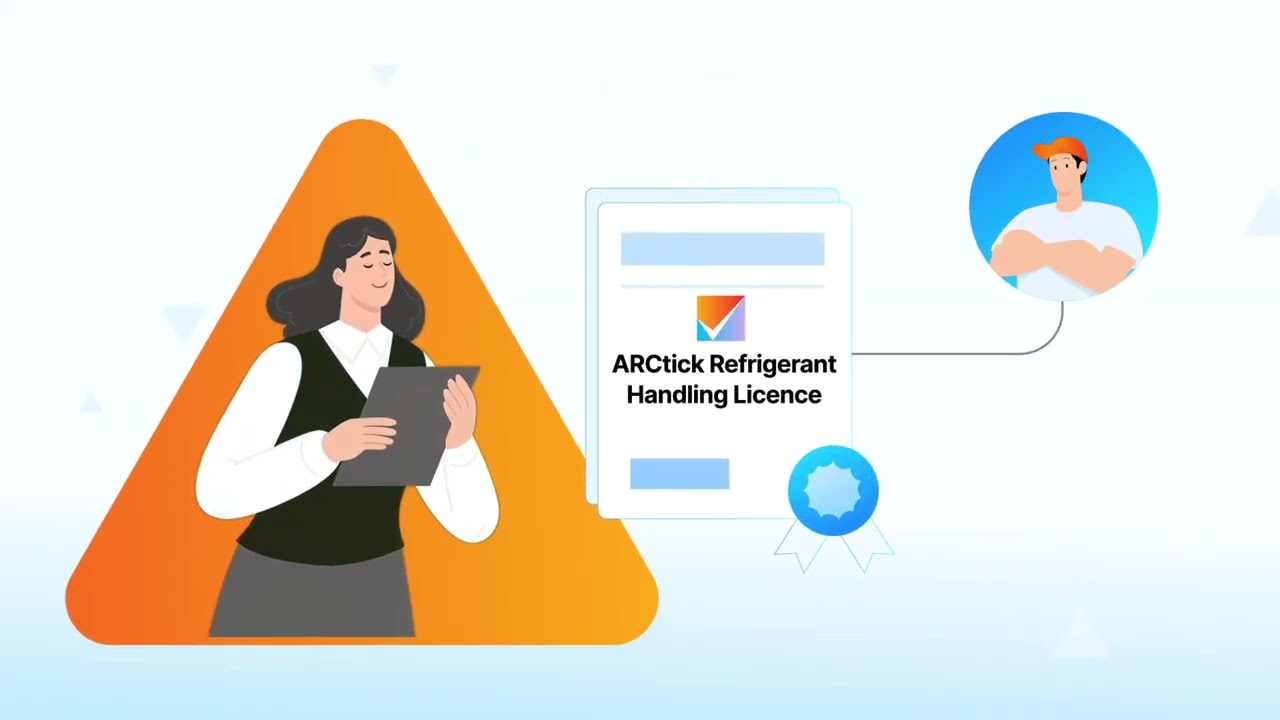
A current refrigerant handling licence from the Australian Refrigeration Council (ARC) is required as well. The level of licence issued is tied to the installer's qualification: a Certificate III supports a full licence, a Certificate II is restricted to limited work.
What Certificate II means, and when it is enough
Certificate II in Split Air Conditioning and Heat Pump Systems, or similar, is a recognised entry-level qualification. It allows certain simpler work within specific limits. It does not cover:
- diagnosing or repairing refrigerant faults
- complex or higher-capacity ducted installations
- full servicing and maintenance of systems
For anything beyond a basic split system, choose an installer with a full ARC licence and the correct supervisor or contractor licences. That is what lets the job be completed safely, legally and to industry standards.
Department store and DIY deals
Department stores often sell an air conditioner with installation included. The installation may be done by a contractor who is not properly licensed, or who is working to a fixed fee that leaves no room for doing it properly: minimal labour, basic components, and skipped steps such as correct electrical work, mounting, noise and ventilation.
DIY installation, or installation by an under-qualified trade, carries the same risks: wrong sizing, refrigerant leaks, electrical hazards, a voided warranty, and work that does not comply with NSW regulations.
If you buy through a store, ask who the installer is and for proof of their licences, and hold them to the same standard you would expect from a standalone installer.
Council rules and rebates
An installer must be licensed for the type of work they are carrying out. Unlicensed or under-qualified work can mean poor performance, safety risks and a voided manufacturer warranty.
Local council rules may apply to the placement of outdoor units: setbacks from property boundaries, visual or heritage restrictions, and noise levels. A professional installer should know and follow them.
Government incentives, such as discounts under the NSW Energy Savings Scheme for more efficient systems, require the work to be done by a fully licensed installer using compliant equipment. A higher efficiency model often attracts a bigger upfront discount as well as lower running costs. Your installer should explain what is available, handle the paperwork, and show the full price, the discount and what is included on the quote.
Questions to ask any installer
- What licences do you hold, and what are the numbers?
- Do you hold the refrigerant handling licence appropriate to this work?
- Can you show examples of similar work you have completed?
- What exactly is in the quote: installation, electrical work, ducting, removal of the old unit, noise management, warranty?
- How will you handle outdoor unit placement, noise levels and any council restrictions?
- Who will carry out repairs, maintenance or warranty work later, and are they qualified?
Before you commit
- Proof of a current NSW air conditioning and refrigeration licence, and an electrical licence where the work needs one
- A current refrigerant handling licence appropriate to the work, backed by a Certificate III or higher
- A clear, itemised written quote covering the installation, the warranty, and compliance with council and regulatory requirements
- Confirmation of eligibility for any available government discount or incentive
Taking the time to check saves you from poor performance and higher bills, repeat breakdowns, refrigerant leaks and safety hazards, a voided warranty, and the penalties that can follow unlicensed work.
Choose an accredited dealer
Every ACDA member has already been checked against the same standard.