
HomeHomeowner guidesHeating
Homeowner guide · Heating
What is heat pump air conditioning?
Most home air conditioners are heat pumps. They move heat from one place to another instead of making it, which is why they heat so cheaply.
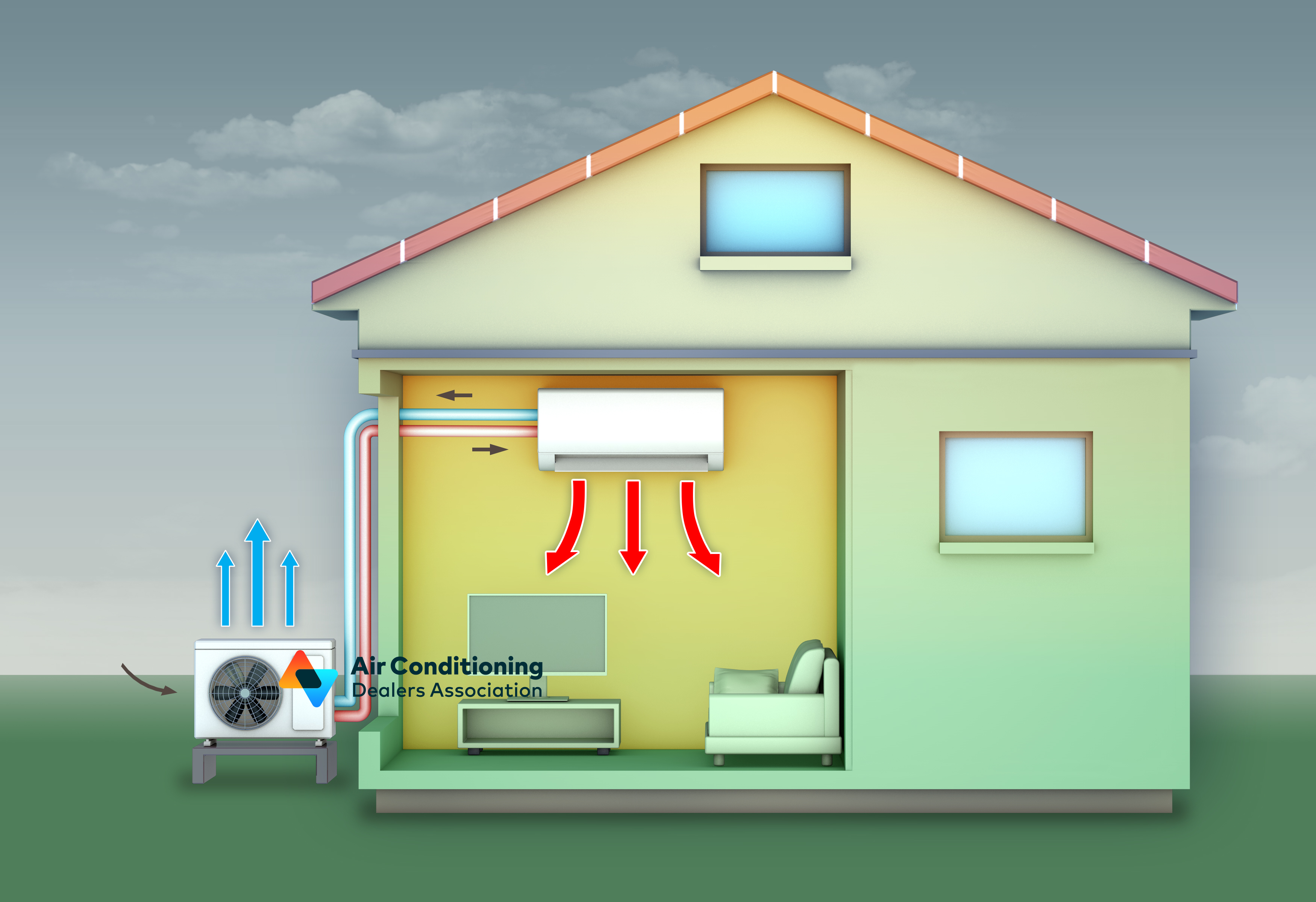
The short version
- A heat pump air conditioner moves heat between inside and outside using the same refrigeration process as your fridge.
- A reversing valve changes the direction the refrigerant flows, so one system both heats and cools.
- For every kilowatt of electricity it uses, a heat pump delivers three or more kilowatts of heat, where an electric heater delivers one.
Most home air conditioners are heat pumps
Most air conditioners found in homes today are heat pump air conditioners. The overwhelming majority are reverse cycle heat pumps, which means they both heat and cool.
The name can be confusing. A heat pump is not a separate kind of appliance you have to ask for. A split system on the bedroom wall and a ducted system in the roof are both heat pumps if they are reverse cycle. If your system heats in winter and cools in summer, it is one.
Knowing how it works helps you run it well, because the same process that makes it efficient also sets how it should be used.
It moves heat rather than making it
An electric heater makes heat. It passes current through an element and the element gets hot. A heat pump does something different. It removes heat (energy) from one location and moves it to another. This is known as the refrigeration process, and it is the same process your fridge uses.
Your fridge does not make cold. It takes heat out of the food compartment and moves it to the coil on the back, which is why the back of a fridge feels warm. A heat pump air conditioner does the same job between the inside of your home and the outside air.
- Cooling: heat is extracted from the home and moved outside, leaving cool air within the home.
- Heating: heat is extracted from outside and moved into the home, leaving warm air within the home.
The reversing valve
The process of changing between heating and cooling is simple. A valve, known as a reversing valve, reverses the flow of the refrigerant within the heat pump system. One direction moves heat out of the house for cooling. The other direction moves heat into the house for heating.
Nothing else needs to change. The compressor, the indoor coil and the outdoor coil are the same parts doing the same work. The valve just decides which coil collects heat and which coil gives it up. That is what makes a reverse cycle system a single unit rather than a heater and a cooler bolted together.
Why it is so efficient
Because a heat pump moves heat instead of making it, it can be a very efficient way to heat, three times or even more efficient than electric heating.
An electric heater uses 1 kilowatt of energy to produce 1 kilowatt of heat. A heat pump air conditioner uses 1 kilowatt to produce 3 or even more kilowatts of heat. The extra heat is not created by the electricity. It is collected from the outside air and carried indoors. The electricity only pays for the moving.
That gap is where the savings on a heating bill come from. Running an inverter system, which varies the compressor speed to hold a set temperature rather than switching on and off, adds to the saving. See what is an inverter compressor for how that works.
Heating in a Sydney winter
In heating mode the system collects heat from the outside air, even when that air feels cold to you. There is still heat energy in it, and the refrigeration process is what gathers it and moves it inside. So a reverse cycle system works as a whole-house or single-room heater through a Sydney, Blue Mountains or Newcastle winter, not just as a summer cooler.
A few habits keep the heating side cheap to run:
- Keep windows and doors closed when the system is heating. Reverse cycle systems condition the air inside, so a draught undoes the work.
- Set the thermostat to 18 to 20 degrees in cold months. Every 1 degree increase can add up to 10 per cent to the heating part of your bill.
- Keep the filters clean. A clogged filter makes the system work harder for the same heat.
There is more in keep warm with reverse cycle air conditioners and how to keep air conditioning cost down this winter.
Check before you rely on it for heating
- Confirm your system is reverse cycle, not cooling only.
- Set winter temperature to 18 to 20 degrees and leave it there.
- Keep windows and doors closed while it is heating.
- Clean or replace the filters before the cold months.
- Keep the outdoor unit clear so it can draw air freely.
- Have the system serviced by a licensed technician each year.
The efficiency of a heat pump depends on the system being sized and installed properly for your home. An ACDA accredited member is a licensed specialist who works to the ACDA Standards, so the system you are sold is the one that will heat and cool the way this guide describes.
Choose an accredited dealer
Every ACDA member has already been checked against the same standard.