
HomeHomeowner guidesRunning costs and efficiency
Homeowner guide · Running costs and efficiency
What temperature should I set my air conditioner to?
The temperatures that balance comfort and running cost, why each degree matters, and the habits that let your air conditioner hold a comfortable setting without working harder than it needs to.
The short version
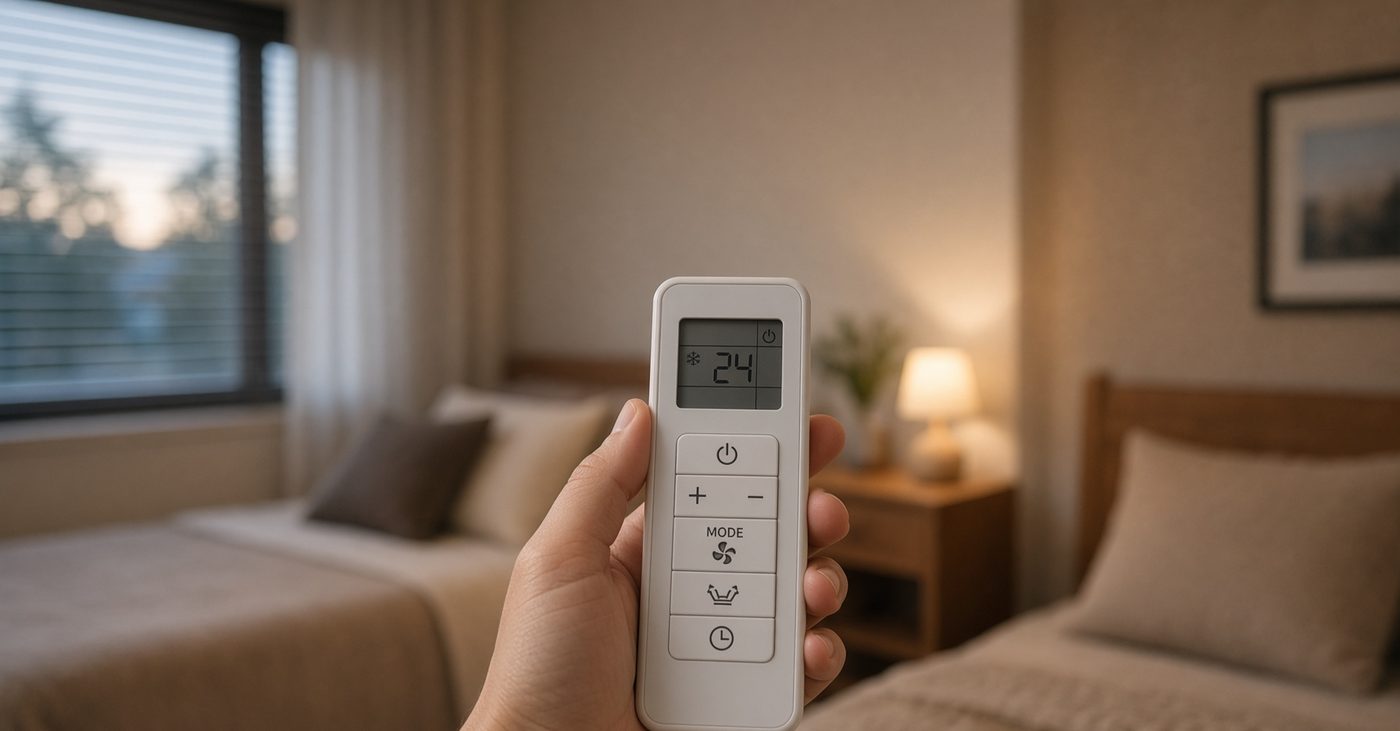
- Set 18 to 20 degrees for heating and 25 or higher for cooling, the figures the ACDA e-guide takes from the RET Good Energy Practice Guides.
- Every degree past that can add up to 10 per cent to the heating or cooling part of your bill, so fans, timers and closed doors matter.
- If a new installation will not hold the temperature, check filters and openings, then call the installer; the accredited member's workmanship is covered by the written Guarantee.
The temperatures to start with
Set 18 to 20 degrees when heating and 25 degrees or higher when cooling. Those are the figures the ACDA e-guide gives, citing the RET Good Energy Practice Guides, and they are the right place to start in Sydney, the Blue Mountains and Newcastle.
In summer many households settle at around 23 to 25 degrees, the range ACDA has suggested before. Anything lower is a choice you pay for.
Set the number, then leave it for about 30 minutes before you judge it, which is what the e-guide suggests. A system matched to the house reaches the setting and holds it, and an inverter varies its compressor speed to do exactly that, so pick a number you can live with and leave it there.
Why each degree matters
Each degree you move the set point past those figures can add up to 10 per cent to the heating or cooling part of your bill. That is the figure the ACDA e-guide attributes to the RET Good Energy Practice Guides, and it works both ways: every degree warmer in winter and every degree cooler in summer.
So the rule is simple. In summer, set the warmest temperature you are comfortable at. In winter, set the coolest. If 25 feels too warm on a humid afternoon, try 24 before you try 21, and give each change half an hour.
Use a ceiling fan with the air conditioner
A ceiling fan does not cool the room. It moves air across your skin, which speeds up evaporation and makes you feel cooler than the thermometer says, and that is why it pairs well with an air conditioner.
Run the two together and you can set the air conditioner warmer while feeling the same. The ACDA e-guide puts the difference at as much as five degrees, and at up to 10 per cent a degree that is a real saving on a long hot afternoon.
Because the fan cools people, not the room, switch it off when you leave. On very humid days less sweat evaporates, so the fan does less and the air conditioner has to do more.
Before summer, check the fan is in its summer direction and wipe the dust off the blades, with the power off.
Timers, programs and starting early
Most modern systems have a timer or programmable controller, and most people never use it. The ACDA e-guide notes that a programmed schedule, letting the temperature drift while nobody is home, can cut a household's energy bill by up to 30 per cent over a year. Set it once and the system stops working for an empty house.
On a hot day, start early. If you wait until the house is already hot, the system has to run at full power to pull the temperature back, in the hottest part of the day, when it runs least efficiently. Start it mid-morning, or use the timer so it is running before you get home, and it only has to hold the temperature rather than chase it.
Close doors, windows and unused rooms
The smaller the space the system has to condition, the less energy it uses. Shut the doors and vents to rooms you are not using, such as bathrooms, laundries and spare bedrooms. With a ducted system, use the zones: living areas by day, bedrooms at night, not the whole house all the time.
Keep outside doors and windows closed while a reverse cycle system is running. Draw curtains or blinds on windows in direct sun, and keep furniture and curtains clear of the outlets. Adjustable louvres go up when cooling and down when heating.
Clean or replace the filters every month or two through the cooling season, more often with constant use, dust or pets. A clogged filter makes the system work harder for the same result, and it is the first thing to check when the house does not feel as cool as the setting says.
If the house will not hold the temperature
If you have set 24 and the living room sits at 27, check the basics first: filters clean, outside openings shut, unused zones closed, system started early enough. Then call the business that installed or services it.
An accredited member works out the heating and cooling capacity your home needs by an approved calculation method, not a rule of thumb, and writes it into the quote. A system never sized for the space will struggle on the hottest days whatever you set. The ACDA Standard lists what every quote must contain.
If a new installation by an accredited member falls short of the ACDA Standards, you can go to the Dispute Resolution Committee. Complete the Dispute Resolution Form, attach your quote, invoice and any photos, and send it to Air Conditioning Dealers Association Inc, PO Box 253, Emu Plains NSW 2750, or [email protected]. ACDA engages an independent Chartered Engineer to investigate, report and arrange for defects to be corrected. The Guarantee is a written workmanship guarantee on new domestic installations by an accredited member, on contracts up to $25,000 including GST, not an equipment warranty and not a price guarantee. Equipment faults go to the manufacturer under its warranty, and your member can help you lodge that claim. How dispute resolution works.
What to set and check
- Heating at 18 to 20 degrees, cooling at 25 or higher, or the warmest you can live with.
- Timer or program set so the system is not running for an empty house.
- Ceiling fans in summer direction, blades wiped, off in empty rooms.
- Filters cleaned or replaced every month or two through the cooling season.
- Doors, windows and unused zones closed while the system runs.
- On a hot day, the system started before the house heats up.
- Quote and invoice filed in case you ever need the Dispute Resolution Form.
An accredited member sizes the system by an approved calculation method and writes that capacity into the quote. If a new installation falls short of the Standards, the Dispute Resolution Committee helps put it right.
Choose an accredited dealer
Every ACDA member has already been checked against the same standard.